Wildlife and Biodiversity on the Kanchenjunga Trek
Exploring the rich wildlife and biodiversity of the Kanchenjunga Trek
Written by
.png)
<script type="application/ld+json">
{
"@context": "https://schema.org",
"@type": "FAQPage",
"mainEntity": [{
"@type": "Question",
"name": "How difficult is the Kanchenjunga Base Camp Trek?",
"acceptedAnswer": {
"@type": "Answer",
"text": "The full Base Camp trek is graded as moderate to difficult, involving altitudes over 16,000 feet. However, our Shadow of Kanchenjunga trip is graded as Easy, making it perfect for families. It features 2-3 hour gentle hikes like the Lhuntse Monastery trail and the Ranidhunga Trek."
}
},{
"@type": "Question",
"name": "Do I need a permit for the Kanchenjunga Trek?",
"acceptedAnswer": {
"@type": "Answer",
"text": "Yes, the region lies within a protected area. Foreign nationals require a Protected Area Permit (PAP) and Restricted Area Permit (RAP) and must trek in a group of at least two with a registered agency like Juniper Outdoor. We handle all permit paperwork for our guests."
}
},{
"@type": "Question",
"name": "Can I do the Kanchenjunga trek solo?",
"acceptedAnswer": {
"@type": "Answer",
"text": "For foreign nationals, solo trekking is strictly prohibited. For Indian nationals, while technically possible, the forest department mandates that all trekkers must be accompanied by a registered guide. Trekking with our support team ensures your safety and comfort in this remote region."
}
},{
"@type": "Question",
"name": "What is the best month for the Kanchenjunga Base Camp trek?",
"acceptedAnswer": {
"@type": "Answer",
"text": "The prime windows are April-May for rhododendrons and October-December for clear views. Our specific Shadow of Kanchenjunga trip in December offers crisp air, lush greenery, and the slow rhythm of mountain life."
}
},{
"@type": "Question",
"name": "Is it safe to trek near wild animals like bears and leopards?",
"acceptedAnswer": {
"@type": "Answer",
"text": "Yes, it is generally safe if you respect their territory. Attacks are extremely rare. Our guides are trained in wildlife behaviour and will ensure you maintain a safe distance. We also ensure trails and campsites are kept clean to avoid attracting wildlife."
}
},{
"@type": "Question",
"name": "How long is the Kanchenjunga Base Camp trek?",
"acceptedAnswer": {
"@type": "Answer",
"text": "The full expedition takes 10-12 days. However, for those seeking a shorter immersive escape, our Shadow of Kanchenjunga trip is 4 nights and 5 days, blending gentle adventure with cultural depth."
}
}]
}
</script>

.jpg)
Exploring the rich wildlife and biodiversity of the Kanchenjunga Trek
Written by
Spread through the vertical terrains of the Eastern Himalayas, Sikkim is a sanctuary for the true wilderness aficionado. While the sheer scale of the mountains often steals the spotlight, there is a secret world hidden within the folds of these peaks. At Juniper Outdoor, we have guided countless adventurers through these landscapes. We can tell you with certainty that the Kanchenjunga trek is not just a walk towards the world’s third-highest peak. It is a journey through a living, breathing zoo without fences.
Don't get us wrong, the mountain views are breathtaking, but for those seeking luxury trekking holidays where nature takes centre stage, the Kanchenjunga Biosphere Reserve offers an experience that is raw, untamed, and utterly magnificent. Whether you are a seasoned naturalist or a trekker who appreciates the silence of the woods, this trail offers a masterclass in biodiversity.
Here is why the Kanchenjunga Base Camp trek and our immersive Shadow of Kanchenjunga journey are the crown jewels of treks in Sikkim for wildlife enthusiasts, and how we help you navigate them in comfort and style.
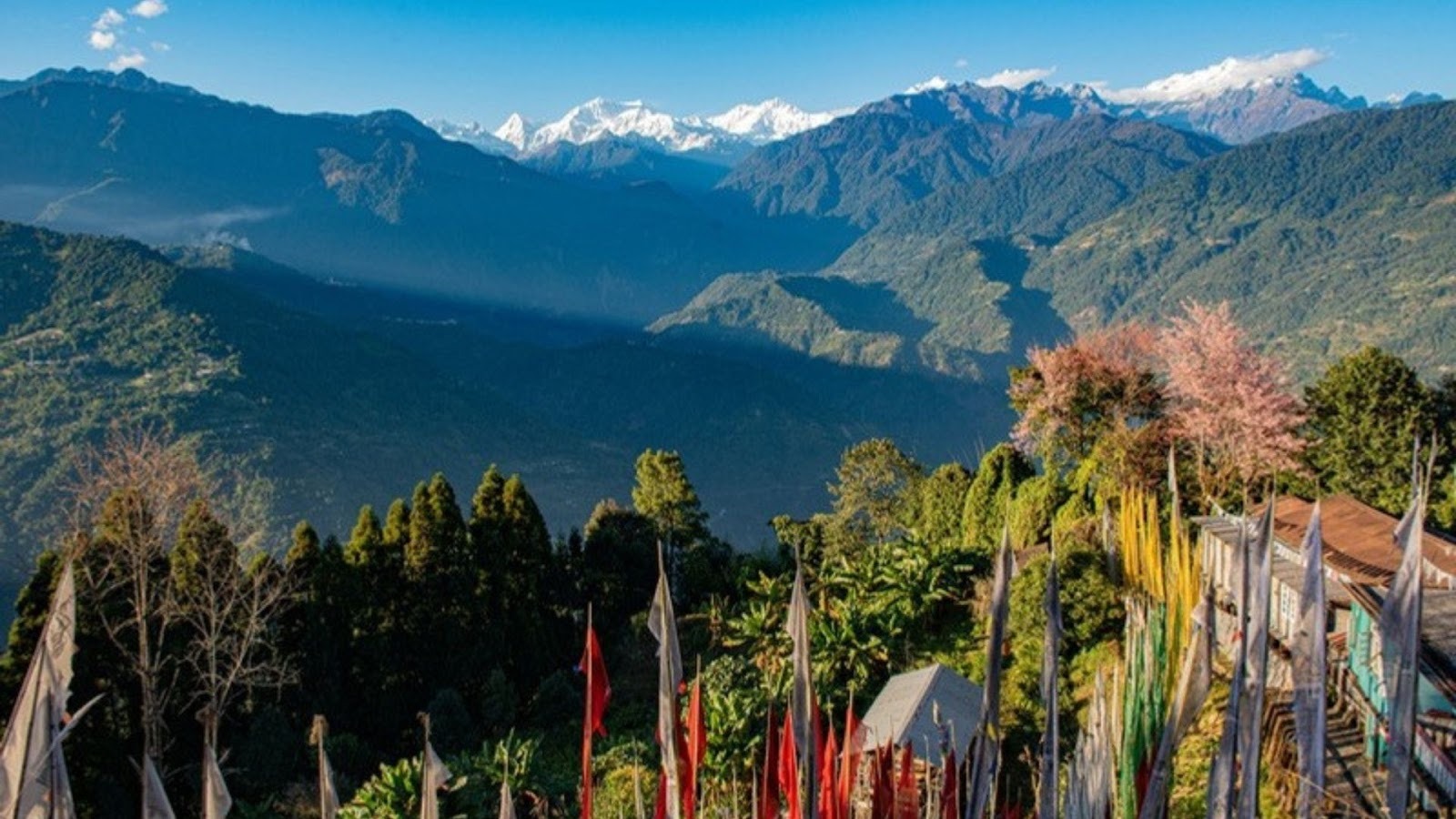
When we plan treks in Sikkim, we often emphasise that this tiny state is a biological powerhouse. The Kanchenjunga region specifically benefits from a dramatic variation in altitude. It rises from sub-tropical woodlands at around 1,200 meters to the arctic zones of the peaks at over 8,000 meters within a very short horizontal distance.
This vertical gradient creates distinctive eco-zones stacked on top of each other like layers of a cake. You aren't just trekking through one landscape. You traverse four or five different worlds. The Khangchendzonga National Park, a UNESCO World Heritage Site, protects this unique ecosystem. It connects the biological richness of the Indian plains with the stark, rugged beauty of the Tibetan plateau.
Unlike the crowded trails of Nepal's Khumbu region, the Kanchenjunga trail remains relatively pristine. This lack of human interference allows wildlife to thrive. It makes this one of the few places left where the "wild" truly feels wild. If you are looking for a comprehensive introduction to the region, our Sikkim Explorer trip provides a fantastic overview of these ecological zones.
The thrill of the Kanchenjunga trek lies in the anticipation. While sightings of elusive predators require patience and a bit of luck, the region is teeming with life. Our expert guides are trained to spot the signs. They look for a pugmark in the mud, a rustle in the bamboo, or a scent in the air.
The "Ghost of the Mountains" reigns supreme here. The high-altitude rocky terrain near Goecha La and the base camp provides the perfect camouflage for this apex predator. While sightings are rare due to their solitary nature, the sheer knowledge that you are walking in the territory of the Snow Leopard adds an electric charge to the atmosphere.
Lower down, in the temperate broadleaf forests and bamboo thickets, lives the state animal of Sikkim: the Red Panda. These arboreal mammals are shy and primarily active at dawn and dusk. But wait until you see a flash of rust-red fur against the green canopy; it is a highlight of any luxury trekking experience here. We advise our trekkers to keep their eyes on the moss-covered branches of oaks and rhododendrons. For those deeply interested in rare mammals, our Namdapha Rainforest Trek is another exceptional journey into biodiversity.
Roaming the forested valleys, the Himalayan Black Bear is a powerful presence. They are often found in the oak and chestnut forests below the snowline. We ensure all our campsites and trails are managed strictly to avoid disturbing them. This allows you to observe their habitat safely from a distance. If you are fascinated by bears, check out our Bear Trail for a dedicated wildlife experience.
As we ascend above the tree line, the terrain belongs to the ungulates. You will likely spot herds of Bharal (Blue Sheep) navigating precipitous cliffs with impossible ease. They are the primary prey of the snow leopard, so where you see Blue Sheep, the cat is often nearby. The Himalayan Goral and the solitary Musk Deer are also treasures of this landscape. We often spot them grazing on alpine shrubs.
To truly immerse yourself in this ecosystem, view our Shadow of Kanchenjunga itinerary, which maximises your time in these prime habitats.
If you are a birder, the Kanchenjunga Base Camp trek is your pilgrimage. With over 550 species of birds recorded in Sikkim, the trail is a constant symphony of calls and colours.
The trek is famous for its pheasants. The Himalayan Monal, with its iridescent rainbow plumage, is a showstopper. We also keep a lookout for the Satyr Tragopan, a crimson beauty often found in the dense undergrowth, and the Blood Pheasant, which is the state bird of Sikkim. These ground-dwelling birds are often seen scurrying across the trail in the misty mornings.
As we climb higher towards Dzongri and Goecha La, look up. You might see the massive wingspan of a Lammergeier (Bearded Vulture) or a Golden Eagle riding the thermals. The alpine meadows are home to flocks of Snow Pigeons and Grandala, whose intense blue colour looks almost unreal against the grey rocks.
From the playful Rufous-vented Yuhina to the melodious Whistling Thrush, the lower forests are alive with activity. Bringing a good pair of binoculars is essential, and our team can help identify species as we trek. For a deep dive into the sounds of the forest, read our blog on The Jungle Concert.
While the charismatic megafauna get the glory, the smaller life forms are equally fascinating. The humid sub-tropical zones of the trail start are rich with amphibian life. This includes rare Himalayan salamanders and various tree frogs that create the soundtrack of the night.
The insect life in Sikkim is staggering. During the post-monsoon months, the diversity of moths and butterflies is incredible. You might encounter the Golden Birdwing or the Kaiser-i-Hind butterfly. Even the creepy-crawlies play a vital role in this ecosystem as they decompose organic matter and feed the birdlife that we admire so much.

The transition of flora on this trek is one of the most dramatic in the Himalayas. It is not just green. It is a technicolour display that changes with every thousand feet of elevation gain.

Timing is everything when you want to optimise for wildlife encounters.
For a detailed breakdown of seasons across the Himalayas, check our guide on the Best Time to Trek in the Himalayas.
At Juniper Outdoor, we believe that luxury trekking implies a luxury of conscience. We operate in a fragile ecosystem, and our footprint must be invisible.
We adhere strictly to "Leave No Trace" principles, but we also go further by engaging with the local community. For instance, on our trips, we visit Begha Village to see the sheep farm and wool weaving centre. Here, you learn how ethical wool is produced using age-old techniques. This supports sustainable livelihoods and ensures the region's relationship with sheep farming remains respectful of nature.
Preparing correctly is part of being responsible. Ensure you have the right gear by reviewing our Essential Trekking Gear Checklist.
Let's be honest, there is a misconception that exploring the deep Himalayas always requires sleeping in a tent at freezing temperatures. We challenge that notion. Our luxury trekking holidays, such as "The Shadow of Kanchenjunga," are designed to let you focus on the biodiversity and the views without the struggle.
This specific journey is a slow, immersive 5-day escape designed for families and those who seek gentle adventure. Instead of roughing it, you stay at the Biksthang Heritage Farmhouse, a quiet retreat nestled in the foothills with farm-to-table organic meals. You move to The Elgin Mount Pandim, perched on a ridge with panoramic views of the peaks.
Your days are filled with the Ranidhunga Trek through quiet forests, walks to Lhuntse Monastery, and hands-on Sikkimese cooking sessions. We handle the logistics, the transfers, and the safety. You simply walk, observe, and immerse yourself in pine-scented trails and honey-tasting sessions. This is what we call "Fire and Ice", warm hospitality under the gaze of the snow-capped giants.
Learn more about how we manage comfort in the wild in our Expedition Style Trekking Routine.
While there are other beautiful treks in Sikkim, such as the Singalila Ridge or Green Lake, the Kanchenjunga region offers the most complete cross-section of biodiversity.
It brings you closer to the giant Mount Kanchenjunga, Kabru, and Rathong than any other trek. Whether you choose the challenging high-altitude base camp trek or our gentler Shadow of Kanchenjunga itinerary, the combination of cultural richness in villages like Begha and Lhuntse, mixed with the wilderness, makes it a holistic adventure. It is a step up from standard tours and is ideal for those looking to upgrade their adventure portfolio.
For those looking for similar iconic experiences elsewhere, you might compare this with our Everest Base Camp and Gokyo Lakes Trek.
The Kanchenjunga trek is more than a physical challenge. It is a sensory awakening. It is about the smell of damp earth in the rhododendron forests, the sound of the Monal taking flight, and the sight of the first sun hitting the Kanchenjunga massif.
At Juniper Outdoor, we are passionate about showing you the wild side of Sikkim without compromising on safety or comfort. We are here to make it happen, whether you are chasing the ghost of the snow leopard on a high expedition or simply wanting to breathe the cleanest air on earth on a family hike.
Are you ready to walk on the wild side?
Book your Kanchenjunga Adventure with us today!
The full Base Camp trek is graded as moderate to difficult, involving altitudes over 16,000 feet. However, our Shadow of Kanchenjunga trip is graded as Easy, making it perfect for families. It features 2-3 hour gentle hikes like the Lhuntse Monastery trail and the Ranidhunga Trek.
Yes, the region lies within a protected area. Foreign nationals require a Protected Area Permit (PAP) and Restricted Area Permit (RAP) and must trek in a group of at least two with a registered agency like Juniper Outdoor. We handle all permit paperwork for our guests.
For foreign nationals, solo trekking is strictly prohibited. For Indian nationals, while technically possible, the forest department mandates that all trekkers must be accompanied by a registered guide. Trekking with our support team ensures your safety and comfort in this remote region.
The prime windows are April-May for rhododendrons and October-December for clear views. Our specific Shadow of Kanchenjunga trip in December offers crisp air, lush greenery, and the slow rhythm of mountain life.
Yes, it is generally safe if you respect their territory. Attacks are extremely rare. Our guides are trained in wildlife behaviour and will ensure you maintain a safe distance. We also ensure trails and campsites are kept clean to avoid attracting wildlife.
The full expedition takes 10-12 days. However, for those seeking a shorter immersive escape, our Shadow of Kanchenjunga trip is 4 nights and 5 days, blending gentle adventure with cultural depth.
.avif)

.avif)

