Ladakh Trek Packages: The Complete Guide for Discerning Travellers Introduction
Ladakh trek packages for high altitude adventure, cultural discovery and luxury trekking in the Himalayas
Written by


Ladakh trek packages for high altitude adventure, cultural discovery and luxury trekking in the Himalayas
Written by
Ladakh trek packages for high altitude adventure, cultural discovery and luxury trekking in the Himalayas
Standing at the edge of a Ladakhi valley with nothing between you and the sky but thin, cold air, you understand something the photographs never quite capture. This is not just a landscape. It is a conversation between earth and altitude, between ancient Buddhist civilisation and one of the most dramatic mountain environments on the planet.
For over six decades, Juniper Outdoor has been curating private Himalayan expeditions rooted in the legacy of Captain M. S. Kohli and India's first successful Everest Expedition of 1965. That heritage shapes everything we do in Ladakh: mentor led travel, responsible exploration and journeys designed to leave travellers genuinely changed rather than simply well transported.
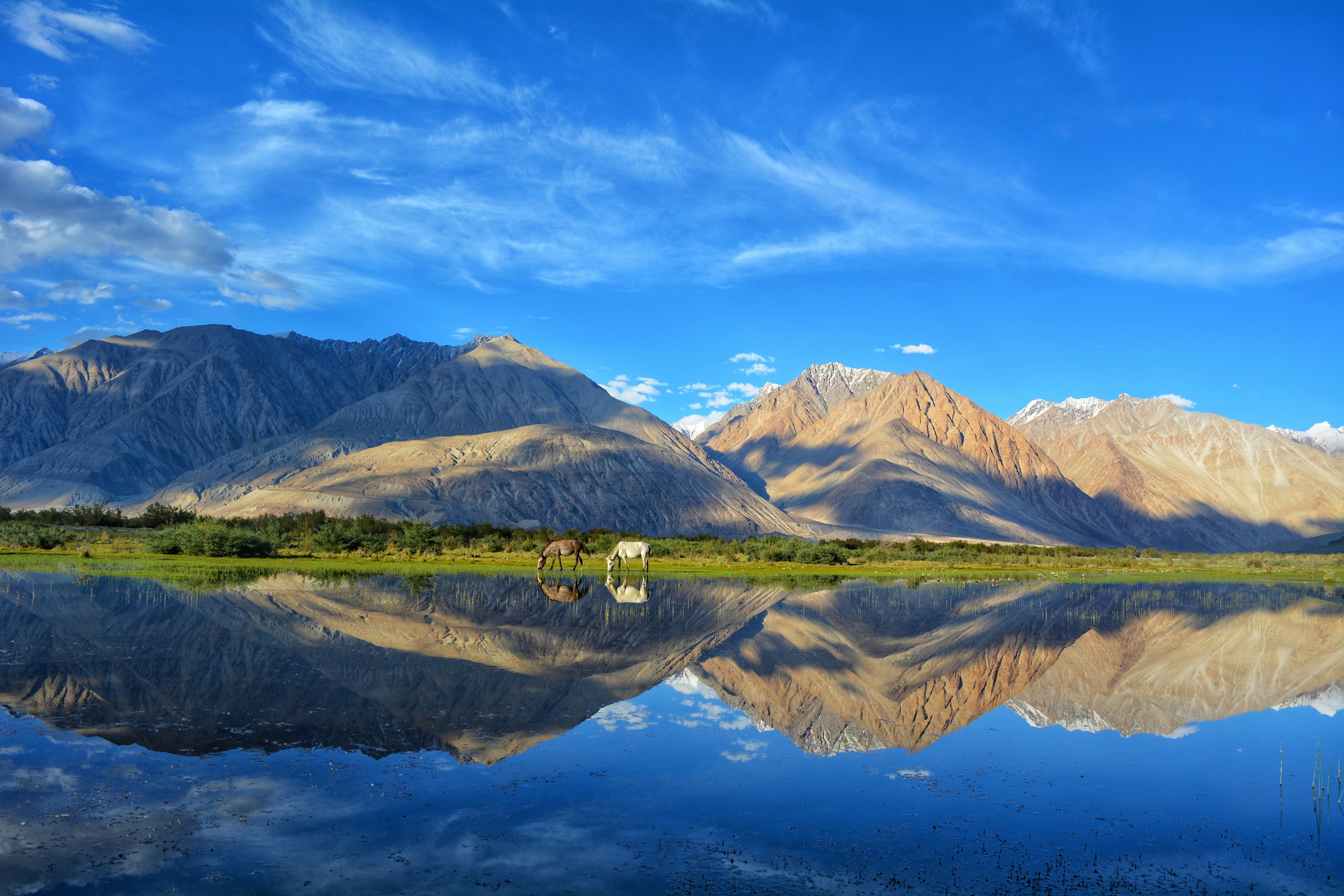
Ladakh occupies a category of its own among Himalayan destinations. While other regions of the Indian Himalayas offer lush forests and verdant meadows, Ladakh presents something altogether different: a high altitude desert landscape of extraordinary scale and stillness, punctuated by ancient monasteries, turquoise rivers and mountain passes that feel like the top of the world.
The region sits between 2,700 and 7,000 metres above sea level. Its air is sharp and clean. Its light at altitude has a clarity that photographers travel from across the world to chase. And its culture, rooted in Tibetan Buddhism and shaped by centuries of isolation, offers a depth of encounter that very few destinations in India can match.
Our Ladakh trekking experiences focus on deliberate, immersive exploration. Small private groups. Expert local guides who have spent their lives in these mountains. Logistics handled so completely that travellers can spend their energy on the experience rather than the organisation. This is what we mean when we speak about luxury trekking in Ladakh: not comfort that replaces the wilderness, but thoughtfulness that allows you to fully inhabit it.
The Markha Valley Trek is the definitive Ladakh trekking experience and the one most travellers returning from Ladakh wish they had done. The route crosses two high passes, moves through remote villages where traditional Ladakhi life continues largely unchanged, and delivers views of Kang Yatse and Stok Kangri that stop you mid-stride.
Our version of this trek is built around private departures, meaning the pace, the itinerary and the experience are shaped entirely around the group making the journey. We include acclimatisation days in Leh before the trek begins, ensuring travellers are properly prepared for the altitude rather than fighting it.
Duration: 7 to 9 days
Best Time: June to September
Altitude: Crosses Kongmaru La at 5,150 metres
Our Advantage: Private departures, expert cultural guides, acclimatisation built into the itinerary
Known as the Baby Trek of Ladakh, Sham Valley is misleadingly named. The landscapes here are vast and beautiful, the monasteries are ancient and the cultural immersion is as rich as on any longer route. What the name really means is that the altitude is more forgiving, making this the ideal entry point for travellers new to high altitude trekking or those who prefer a gentler physical challenge.
Our Sham Valley programme combines the trek with curated monastery visits, village encounters and evenings at carefully selected guesthouses where local hospitality is part of the experience.
Duration: 3 to 5 days
Best Time: April to October
Altitude: Maximum approximately 3,800 metres
Our Advantage: Ideal for first time high altitude trekkers, rich cultural programme, comfortable accommodation throughout
The Snow Leopard Trail in the Hemis National Park region is one of the rarest wildlife experiences available anywhere in the world. Hemis is home to the highest density of snow leopards on the planet, and winter, when the cats come lower in search of prey, is when the chances of sighting are at their peak.
This is not a standard trekking programme. It requires patience, expert naturalist guidance and a genuine appreciation for the wild on its own terms. But for those who have dreamed of seeing a snow leopard in its natural habitat, there is no experience we offer that comes close to this one.
Duration: 10 to 14 days
Best Time: January to March
Our Advantage: Expert wildlife naturalists, small group sizes for minimal disturbance, acclimatised base camps
Tso Moriri is one of the highest lakes in the world, sitting at 4,522 metres in the remote Changthang plateau. The route to and around the lake passes through landscapes that feel genuinely uninhabited: wide valleys, nomadic Changpa communities and a quality of silence that is difficult to describe and impossible to forget.
Our Tso Moriri expeditions are designed for travellers seeking something beyond the standard Ladakh circuit, combining the lake journey with cultural encounters with the Changpa people, whose nomadic yak herding traditions have shaped this plateau for centuries.
Duration: 8 to 12 days
Best Time: July to September
Altitude: Tso Moriri lake at 4,522 metres
Our Advantage: Access to restricted areas, Changpa community engagement, private expedition format
Of all the experiences Ladakh offers, the Chadar Trek is perhaps the most singular. Each winter, the Zanskar River freezes solid, creating a highway of ice through one of the most inaccessible gorges in the Himalayas. For centuries, this frozen river was the only winter route connecting Zanskar to the outside world. Today, it is one of the most extraordinary adventure treks in India.
Walking the Chadar means crossing blue ice, camping in caves used by Zanskar traders for generations and moving through a landscape so remote and dramatic that it operates entirely outside ordinary reference points. Temperatures can fall to minus 30 degrees Celsius at night. The days are brilliant and cold.
We run the Chadar with meticulous preparation: proper cold weather gear, experienced local guides who know the ice conditions intimately, and camp setups that ensure warmth and safety without compromising the extraordinary nature of the experience.
Duration: 9 to 11 days
Best Time: January to February
Our Advantage: Expert ice guides, full cold weather kit briefing, private group departures only
Understanding Ladakh's seasons is essential to planning the right experience.
June to September is the primary trekking season. The passes are open, the trails are accessible and the days are long and clear. This is the ideal window for Markha Valley, Tso Moriri and most high altitude routes. Temperatures during the day are comfortable, though nights at altitude remain cold.
October and November offer a transitional season of extraordinary beauty. The tourist crowds thin considerably, the light turns golden and the landscape shifts into autumnal tones. Some higher passes begin to close but lower routes remain excellent.
January to March is the season for the Chadar Trek and the Snow Leopard Trail. This is Ladakh at its most demanding and its most dramatic. Only travellers with genuine preparation and the right guidance should attempt winter journeys here.
April and May bring a brief spring window before the main season. Sham Valley works beautifully in this period and Leh itself is at its quietest.
There is a version of Ladakh trekking that treats difficulty as a feature. Large groups, rushed itineraries, basic logistics and the assumption that suffering is somehow more authentic.
We take the opposite view.
Luxury trekking in Ladakh means exceptional leadership above all else. Our guides are not simply route finders. They are people who have spent decades in these mountains and understand them, the history, the culture, the ecology, the spiritual traditions, as deeply as anyone alive. Walking with them is itself an education.
It means small groups, never more than eight to ten travellers on a private departure, because the quality of an experience in the mountains is directly related to the size of the group making it.
It means acclimatisation taken seriously. Altitude sickness is real and it does not discriminate by fitness level. We build proper acclimatisation into every Ladakh programme because arriving in good physical shape matters less than ascending at the right pace.
And it means attention to the details that most operators overlook: the right camp positioning, the quality of food at altitude, the management of cold weather gear, the cultural protocols at monasteries and in villages. These are not small things. They are the difference between a journey that merely happens and one that genuinely matters.
Juniper Outdoor's connection to the Himalayas is not a recent commercial decision. It is a seventy year legacy rooted in the mountaineering heritage of Captain M. S. Kohli and the conviction that exploration, undertaken with the right purpose and preparation, is one of the most meaningful things a person can do.
In Ladakh specifically, this means relationships with local communities built over decades. It means guides who are not freelancers hired for a season but people whose families have lived in these mountains for generations. It means a commitment to responsible tourism that goes beyond the language of sustainability: we actively support local livelihoods, work with monasteries on conservation projects and design our itineraries to distribute economic benefit beyond the obvious tourist circuits.
When you travel with Juniper in Ladakh, you are not buying a product. You are joining a tradition.
Ladakh is not for everyone, and that is precisely what makes it so extraordinary for those it calls.
It requires some physical preparation, a genuine curiosity about a culture and landscape utterly unlike anything in ordinary life, and a willingness to be humbled by scale. In return, it offers something that very few places on earth still can: the experience of genuine remoteness, of landscapes untouched by the speed and noise of modern life, and of a civilisation whose relationship with its environment is ancient, considered and profound.
The finest Ladakh trek packages do not simply move travellers through this landscape. They create the conditions for genuine encounter with it.
That is what we have always tried to do.
Our Ladakh specialists are available to discuss private departure dates, fitness preparation, acclimatisation planning and how to design the journey that is right for you. Every Juniper programme begins with a conversation, and we would be honoured to start one.
At Juniper Outdoor, meals are not just nourishment — they are moments of warmth, hospitality, and connection. Our food service philosophy blends Himalayan simplicity with genuine care. Guests are always served first, with meals beginning only once everyone is seated and comfortable. On arrival at camp or during cold conditions, hot beverages such as tea, coffee, or soup are offered as a gesture of comfort. The guides and kitchen team assist with quiet professionalism — introducing each dish, explaining local flavors, and accommodating dietary preferences. Every camp follows strict hygiene standards: hands are washed before handling food, dishes are covered at all times, and waste is managed responsibly. We serve a balanced mix of Bhutanese, Indian, and continental meals, ensuring variety without compromising on nutrition or safety. For guests with specific dietary requirements — vegetarian, vegan, Jain, or allergies — all preferences are cross-checked before departure and honored diligently. Dining is communal, designed to encourage shared conversation and camaraderie, where stories of the day unfold over steaming plates. Alcohol is avoided on trekking days for health and altitude safety, but a light celebratory drink may be shared post-trek if culturally appropriate and desired by the group. The team ensures mealtimes are unhurried, courteous, and inclusive — the cook, servers, and leader working as one family. Even in harsh mountain environments, we hold ourselves to the highest standards of grace and hospitality, believing that how food is served reflects how deeply we care. When guests sit together under the dining tent, warmed by laughter and lantern light, it’s more than a meal — it’s the heart of the Juniper experience: warmth, humility, and shared humanity in the mountains.
Safety is the foundation of every Juniper Outdoor journey. Our approach combines preparedness, training, and compassion — ensuring that every guest feels protected and cared for from start to finish. Each trek is equipped with a comprehensive first-aid and medical kit, including altitude-related medication, bandages, antiseptics, and a portable oxygen cylinder for emergencies. A trained Trip Leader and first responder accompany every departure, fully certified in wilderness first aid and altitude management. Before the trek begins, guests are briefed on essential safety practices, hydration, hygiene, and what to do in case of discomfort. Once on the trail, we conduct daily health monitoring, recording each participant’s oxygen saturation and pulse to track acclimatization and prevent potential issues before they arise. Camps are designed to be clean, hygienic, and secure, with safe drinking water sourced, filtered, and boiled under strict supervision. In remote regions, an emergency evacuation plan is pre-coordinated with Bhutanese authorities and local response units to ensure rapid assistance if needed. Vehicles, ponies, or helicopters may be mobilized depending on terrain and urgency. Our crew undergoes regular safety drills and follows strict sanitation and waste management protocols, ensuring both human and environmental safety. Guests are encouraged to communicate openly about any physical or emotional discomfort — our team prioritizes empathy, confidentiality, and proactive care. Beyond the physical safeguards, safety for us also includes mental reassurance: knowing that your guides are vigilant, calm, and capable. Every decision made in the field follows Juniper Outdoor’s principle — “Safety before schedule”. This ensures that even when weather or logistics demand changes, the comfort and security of our guests always take precedence. We believe that the true spirit of adventure comes not from risk, but from trust — trust in our people, our systems, and our shared respect for the mountains.
Yes - we offer a curated selection of beginner-friendly and family-oriented trips that prioritize comfort, safety, and immersive learning. These trips typically involve shorter walking days, lower altitudes, and culturally rich experiences that engage both adults and younger travelers. We’ve guided families with kids as young as 7 and first-time trekkers in their 60s. Each trip page will indicate whether it’s suited for beginners or families. Our team provides age-appropriate gear checklists, acclimatization guidance, and pacing that suits the slowest walker. Activities like village walks, nature spotting, campsite games, or storytelling sessions around the fire make the experience more than just a trek — it becomes a memory for life. If you’re unsure which trip is best, reach out, and we’ll tailor a recommendation. Whether it’s your first step into the mountains or a way to introduce your kids to nature, we’ll make sure it’s magical.
Absolutely — custom and private journeys are one of our specialties. Whether it’s a milestone birthday trek, a leadership retreat, a family adventure, or a private Himalayan odyssey with close friends, we’ll co-create the itinerary with you from scratch. You can choose your preferred dates, pace, style of travel (luxury, minimalist, alpine, cultural), and add special touches like local experiences, yoga, photography, or expert-led workshops. Our team handles every detail — permits, logistics, menus, support staff — so you can just focus on the experience. Depending on the group size and region, we can also include glamping setups, private chefs, or curated stays at off-grid homestays. Whether you want to summit a pass in Sikkim or sip salt tea with nomads in Ladakh, we’ll make it happen. Reach out through the “Customized trip format section” on the website, and we’ll begin with a discovery call to design your dream journey.
Yes—acclimatization is critical for any trip above 2,700–3,000 meters, and Juniper takes it seriously. Our itineraries are intentionally designed with built-in rest or acclimatization days, gradual altitude gains, and a “climb high, sleep low”philosophy to reduce your chances of Acute Mountain Sickness (AMS). On the trail, our guides monitor everyone’s health and hydration closely. If you’re coming from sea level, we recommend arriving at the start point (like Leh orManali) at least a day in advance to rest and begin the process. For strenuous or high-altitude treks (over 4,000 m), we also offer acclimatisation extensions or prep treks. Most travellers adjust well with proper pacing, hydration, and nutrition. We provide tips and protocols in your pre-departure kit, and our team carries oxygen cylinders and first aid if needed. Your safety is our top priority—no summit is worth compromising your health.
Yes — travel insurance is mandatory in Nepal or for trips rated 4 or 5 (difficulty rating), especially those in remote or high-altitude areas. Your policy should include coverage for emergency medical evacuation, high-altitude trekking (if applicable), trip cancellation, and baggage loss or delays. While the chances of needing evacuation are rare, in the Himalayas, even minor health issues can require airlift or medical care, which is costly without coverage. We recommend policies from providers familiar with adventure travel, and we’re happy to share a list of trusted options depending on your country of residence. Please read your policy terms carefully and share your insurance details with our team before departure. For international destinations like Nepal or Bhutan, border officials may also ask for proof of insurance. Having the right protection brings peace of mind—for you and for us—so that we can focus on creating an unforgettable experience, not logistics in crisis.
Absolutely— many of our travelers come solo and end up making lifelong friendships on the trail. You don’t need to assemble a group to book with Juniper. Each trip that’s tagged under “community trip or mentor led trip”has fixed departure dates where individuals, couples, or small groups can signup and join a larger group of like-minded outdoor enthusiasts. We limit group sizes to ensure a high-quality, personalised experience. If you’d prefer a private departure for your family or friends, we can customize the trip to your pace and interests. For solo travelers, we pair you in shared twin accommodation (or offer a single supplement if you’d prefer your own room/tent). Our trips attract thoughtful, adventurous people, and the community vibe is a big part of what makes a Juniper experience special. Whether you're flying solo or bringing your tribe, we’re excited to welcome you.
As a company, we are deeply committed to the "Leave No Trace" philosophy. For us, this means minimizing our environmental impact in every way possible—ensuring that the natural places we visit remain undisturbed, preserved, and respected. Whether it’s through responsible waste management, choosing low-impact accommodations, or working with partners who share our values, we strive to leave the landscapes we explore as we found them—or better. This ethos guides our decisions and helps shape a more sustainable and mindful way of traveling. Many of our itineraries include community-led experiences that promote cultural exchange — with full respect to traditions and privacy. We brief every group on cultural etiquette, language tips, and local dos and don’ts.
.avif)

.avif)

