Ladakh in Winter: The Himalayan Journey Most Travellers Overlook
There is a version of Ladakh that almost nobody sees.
Written by


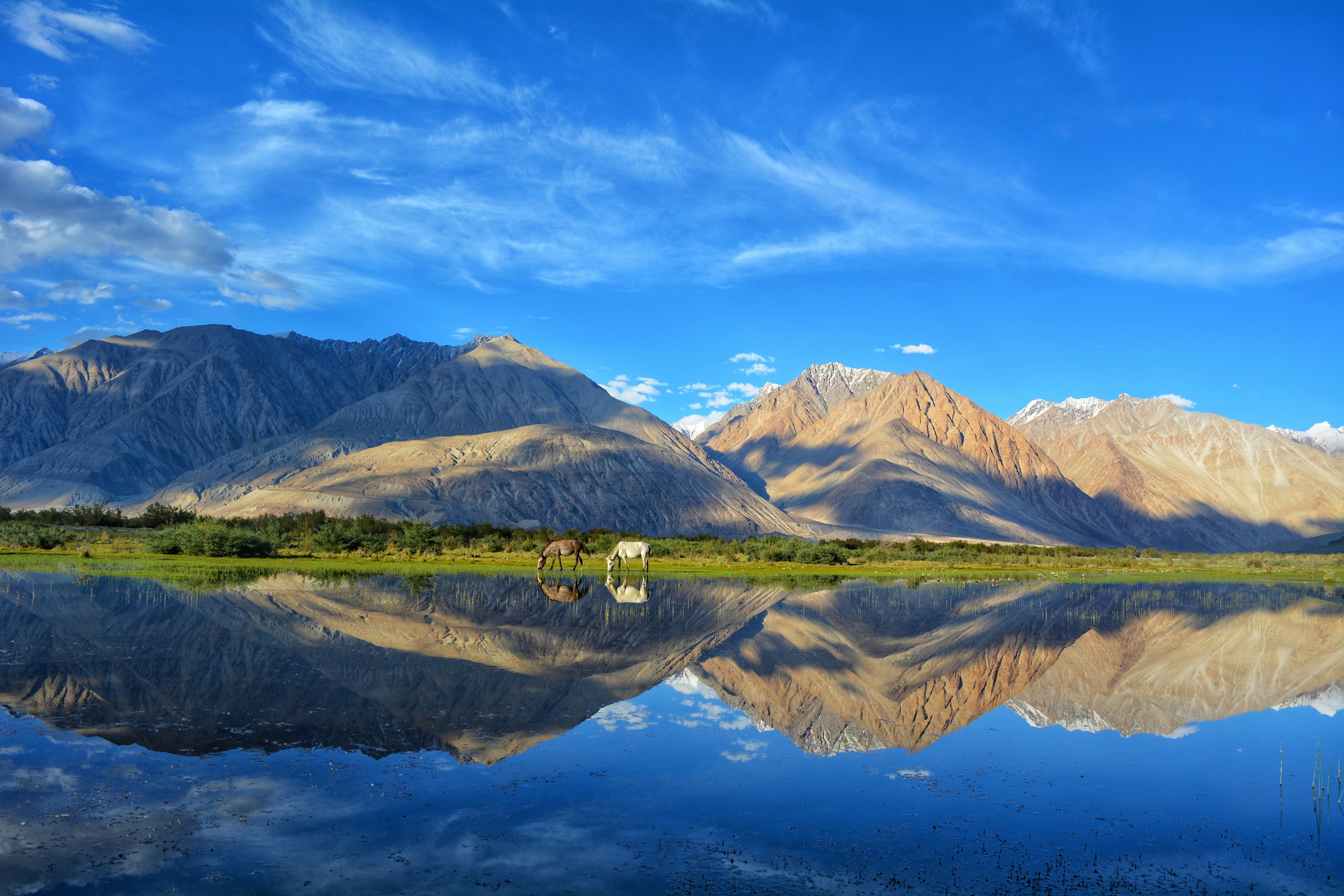
There is a version of Ladakh that almost nobody sees.
Written by
In summer, the Leh Manali Highway carries a steady stream of motorcyclists, backpackers and tour groups moving through a landscape that is undeniably dramatic but increasingly familiar. The popular viewpoints are crowded. The monasteries host queues. The camps along the Markha Valley fill quickly. Ladakh in summer is extraordinary, but it is no longer a secret.
Winter is different in almost every way that matters.
Between November and March, the high passes close, the tourist infrastructure largely shuts down and the population of foreign visitors drops to a fraction of its summer peak. What remains is something that the summer visitor never quite encounters: Ladakh as it actually is. Still, spare, achingly cold and possessed of a quality of silence that has no equivalent elsewhere in India.
For the traveller who values depth over comfort, rarity over accessibility and genuine experience over the reliably photogenic, Ladakh in winter may be the most rewarding Himalayan journey available.
1. What Changes in Winter
The transformation that winter brings to Ladakh is not simply meteorological. It changes the fundamental character of the place.
The landscape, already stark by any standard, becomes something closer to elemental. Snow covers the upper valleys and the high plateaus, while the valleys themselves take on a clarity and stillness that the summer haze and tourist traffic tend to obscure. The light at altitude in winter is extraordinary, sharp and low and golden in a way that photographers who have visited in both seasons consistently describe as incomparable.
The Zanskar River, which flows through one of Ladakh's most remote valleys, begins to freeze from the edges inward from late December, eventually forming the Chadar, a corridor of ice that has been the only winter access route into Zanskar for generations of local people. Walking the Chadar is one of the most genuinely unusual journeys available anywhere in the world, a route that exists for only a few weeks each year and that requires conditions that no amount of planning can fully guarantee.
The cultural life of Ladakh also shifts in winter. With fewer visitors and more time, monasteries become active in ways that summer tourism tends to interrupt. The great winter festivals, including Gustor at Hemis and the monastic ceremonies at Spituk and Matho, take place during these months, attended primarily by local communities rather than international visitors. To witness these ceremonies without the mediation of a tourist crowd is to encounter something that feels genuinely rare.
2. The Chadar Trek
Of all the experiences that winter Ladakh offers, the Chadar trek is the one that has no equivalent anywhere.
Chadar means sheet or blanket in Urdu, and the name refers to the sheet of ice that forms across the surface of the Zanskar River as temperatures drop below minus 20 degrees Celsius in January and February. For centuries, this frozen river was the only way for the people of Zanskar to reach the outside world during the winter months. They would walk it carrying goods for trade, returning with supplies to last the cold season.
The route runs for approximately 105 kilometres through a gorge of extraordinary drama. The canyon walls rise hundreds of metres on either side, and the walker moves through a landscape that shifts constantly between open ice, frozen waterfalls suspended on cliff faces, and narrow sections where the river ice is pressed between rock walls with barely enough room to pass. Camps are made in caves carved into the canyon walls, and the only sounds at night are the occasional crack of ice adjusting to temperature changes and, if you are fortunate, the wind moving through the gorge above.
What makes the Chadar genuinely extraordinary is its impermanence. The ice forms in response to temperature and flow conditions that vary every year. Some years it forms early and holds well into February. Other years it is unpredictable, cracking and reforming in ways that require constant route adjustment. The journey is never quite the same twice, and the possibility of the route changing underfoot adds a quality of genuine adventure that more established treks, however spectacular their scenery, cannot replicate.
The physical demands are real. Temperatures regularly drop below minus 20 at night and rarely rise above minus 10 during the day. Walking on ice requires constant attention and a pace that the body takes time to adjust to. But the Chadar is not technically difficult in the mountaineering sense. It requires physical fitness, appropriate equipment and the psychological readiness to be genuinely cold and genuinely remote for ten days. In return it offers something that almost no other journey can claim: the experience of moving through a landscape that exists, in this form, for only a few weeks each year.
3. Winter Wildlife in the Ladakh High Desert
Winter is the best time to see Ladakh's most extraordinary wildlife, and this is one of the most underappreciated facts about the region.
The snow leopard, one of the most elusive large predators in the world, becomes marginally more visible in winter as it follows its prey, primarily blue sheep and ibex, down from the high altitude summer ranges to the valleys where human settlements are located. Wildlife experts and naturalists who have spent years working in the region consistently report that winter, particularly January and February, offers the best conditions for genuine sightings.
The Hemis National Park, which covers a vast area of high altitude terrain in eastern Ladakh, is home to one of the highest densities of snow leopard in any protected area in the world. Tracking these animals in winter requires patience, cold tolerance and expert local knowledge, but the possibility of seeing one of the world's most beautiful and rarely encountered wild cats in its actual habitat is a compelling reason to make the journey regardless of the season.
Beyond the snow leopard, winter Ladakh supports populations of Tibetan wolves, Eurasian brown bears in their pre-hibernation states, golden eagles and a range of high altitude birds that are not present during summer. The Pangong Lake area, so heavily visited in summer, is in winter the domain of migratory waterfowl and the occasional glimpse of a Tibetan fox moving across frozen ground. The contrast with the summer experience of the same landscape, crowded with vehicles and visitors, could not be more complete.
4. Cultural Immersion Without Compromise
The argument for visiting Ladakh in winter extends well beyond the physical landscape and the wildlife. It is equally compelling for travellers whose primary interest is cultural.
The Ladakhi Buddhist tradition is one of the oldest continuously practised religious cultures in the world, and its rhythms are not organised around the summer tourist season. The major religious festivals, the ceremonies marking the Tibetan Buddhist calendar, the community gatherings at monasteries and the daily life of villages that has continued largely unchanged for centuries all happen throughout the year. In winter, they happen without an audience of outsiders.
Attending the Gustor festival at Hemis Monastery, or the Dosmoche festival in Leh, in the company primarily of local families and monks rather than international visitors changes the nature of the encounter fundamentally. The ceremony is not performed for you. You are simply present, a fortunate witness to something that would be happening exactly the same way whether you were there or not. This is the quality of cultural experience that Juniper Outdoor is designed to facilitate, and winter provides it more reliably than any other season.
The monasteries themselves are more accessible in winter in another sense. The monks are in residence, engaged in study and practice rather than managing visitor flows. Conversations are possible in ways that the summer rush tends to preclude. The head lamas and senior teachers who make themselves available to serious visitors during the winter months are often less accessible in summer, when the combination of festival preparations and tourist obligations fills their time.
5. Preparing for Winter Ladakh
Winter Ladakh requires preparation that goes well beyond what most Himalayan journeys demand, and it is worth being honest about what that preparation involves.
The cold is the primary consideration, and it is serious. Leh sits at 3500 metres, and temperatures in January and February regularly drop to minus 20 at night. On the Chadar, temperatures of minus 25 or lower are not unusual. The equipment requirements are correspondingly specific: high quality down sleeping rated to minus 30, layering systems designed for extreme cold, insulated boots capable of keeping feet warm on ice for extended periods, and the kind of face and hand protection that climbers use at altitude. None of this is negotiable, and arriving with inadequate equipment significantly increases both the discomfort and the risk of a winter Ladakh journey.
Acclimatisation is as important in winter as in summer, and in some respects more so. The cold makes the altitude feel more acute, and the body's response to cold stress and altitude stress simultaneously can be demanding. Arriving at Leh and spending at least three days there before attempting any serious activity is essential, and this time should be used quietly, without heavy exertion, with good hydration and close attention to how the body is responding.
The logistics of winter travel in Ladakh require expert local knowledge and established relationships. Many hotels, restaurants and services close entirely from November to March. Those that remain open operate on reduced capacity. Transportation is limited and road conditions can change rapidly. Arranging a winter journey to Ladakh without an experienced operator who has genuine relationships on the ground is possible in theory and inadvisable in practice.
6. The Juniper Outdoor Approach to Winter Ladakh
At Juniper Outdoor, winter expeditions to Ladakh are designed around the principle that the season's demands and the season's rewards are inseparable.
Our approach begins with preparation. Every traveller who joins a winter Ladakh journey receives detailed guidance on equipment, physical conditioning and altitude preparation well before departure. We do not believe in surprising people with the reality of winter Ladakh. We believe in ensuring that every traveller arrives ready for it, which is what makes the experience rewarding rather than merely arduous.
In the field, our team includes guides with years of winter experience in the region, established relationships with monastery communities, and the cultural knowledge to facilitate encounters that go beyond the logistical. The snow leopard tracking programmes we run in Hemis draw on relationships with local naturalists and researchers who have spent years studying these animals and whose ability to read landscape and animal behaviour makes the difference between a walk in the snow and a genuine wildlife encounter.
This is the spirit of exploration that has guided Juniper since its founding, rooted in the legacy of Captain M. S. Kohli and the belief that the most valuable journeys are those that demand something of the traveller in return for something that cannot be found anywhere else.
7. Why Winter Changes How You See Ladakh
There is something that consistently happens to travellers who visit Ladakh in winter, and it is worth naming directly.
They return changed in a way that summer visitors rarely report. The cold strips away the incidental. The silence removes the background noise that most of us carry everywhere without noticing it. The remoteness, which in summer is relative and in winter is absolute, creates conditions in which the mind has no choice but to settle. Days organised around walking on ice or waiting for a snow leopard to emerge from rocky cover are days structured by attention and patience rather than by schedules and information.
Ladakh in winter does not offer the Himalayan experience most travellers expect. It offers something considerably less comfortable and considerably more lasting: the experience of being genuinely present in one of the world's most extraordinary places, without the mediation of crowds, infrastructure or the reassurance of easy return.
For the traveller who is ready for that, there is no better season to come.
Yes - we offer a curated selection of beginner-friendly and family-oriented trips that prioritize comfort, safety, and immersive learning. These trips typically involve shorter walking days, lower altitudes, and culturally rich experiences that engage both adults and younger travelers. We’ve guided families with kids as young as 7 and first-time trekkers in their 60s. Each trip page will indicate whether it’s suited for beginners or families. Our team provides age-appropriate gear checklists, acclimatization guidance, and pacing that suits the slowest walker. Activities like village walks, nature spotting, campsite games, or storytelling sessions around the fire make the experience more than just a trek — it becomes a memory for life. If you’re unsure which trip is best, reach out, and we’ll tailor a recommendation. Whether it’s your first step into the mountains or a way to introduce your kids to nature, we’ll make sure it’s magical.
As a company, we are deeply committed to the "Leave No Trace" philosophy. For us, this means minimizing our environmental impact in every way possible—ensuring that the natural places we visit remain undisturbed, preserved, and respected. Whether it’s through responsible waste management, choosing low-impact accommodations, or working with partners who share our values, we strive to leave the landscapes we explore as we found them—or better. This ethos guides our decisions and helps shape a more sustainable and mindful way of traveling. Many of our itineraries include community-led experiences that promote cultural exchange — with full respect to traditions and privacy. We brief every group on cultural etiquette, language tips, and local dos and don’ts.
Absolutely— many of our travelers come solo and end up making lifelong friendships on the trail. You don’t need to assemble a group to book with Juniper. Each trip that’s tagged under “community trip or mentor led trip”has fixed departure dates where individuals, couples, or small groups can signup and join a larger group of like-minded outdoor enthusiasts. We limit group sizes to ensure a high-quality, personalised experience. If you’d prefer a private departure for your family or friends, we can customize the trip to your pace and interests. For solo travelers, we pair you in shared twin accommodation (or offer a single supplement if you’d prefer your own room/tent). Our trips attract thoughtful, adventurous people, and the community vibe is a big part of what makes a Juniper experience special. Whether you're flying solo or bringing your tribe, we’re excited to welcome you.
Yes—acclimatization is critical for any trip above 2,700–3,000 meters, and Juniper takes it seriously. Our itineraries are intentionally designed with built-in rest or acclimatization days, gradual altitude gains, and a “climb high, sleep low”philosophy to reduce your chances of Acute Mountain Sickness (AMS). On the trail, our guides monitor everyone’s health and hydration closely. If you’re coming from sea level, we recommend arriving at the start point (like Leh orManali) at least a day in advance to rest and begin the process. For strenuous or high-altitude treks (over 4,000 m), we also offer acclimatisation extensions or prep treks. Most travellers adjust well with proper pacing, hydration, and nutrition. We provide tips and protocols in your pre-departure kit, and our team carries oxygen cylinders and first aid if needed. Your safety is our top priority—no summit is worth compromising your health.
Yes — travel insurance is mandatory in Nepal or for trips rated 4 or 5 (difficulty rating), especially those in remote or high-altitude areas. Your policy should include coverage for emergency medical evacuation, high-altitude trekking (if applicable), trip cancellation, and baggage loss or delays. While the chances of needing evacuation are rare, in the Himalayas, even minor health issues can require airlift or medical care, which is costly without coverage. We recommend policies from providers familiar with adventure travel, and we’re happy to share a list of trusted options depending on your country of residence. Please read your policy terms carefully and share your insurance details with our team before departure. For international destinations like Nepal or Bhutan, border officials may also ask for proof of insurance. Having the right protection brings peace of mind—for you and for us—so that we can focus on creating an unforgettable experience, not logistics in crisis.
Booking with Juniper Outdoor is simple. Once you find a trip that excites you, click the "Contact Us " or “WhatsApp” button on the trip page. This will lead you to a short form that collects your contact information and preferences. Our team will then reach out to you with availability, a brief consultation if needed, and next steps. You can secure your slot by paying a deposit or full amount, after which we’ll send you a detailed pre-departure pack including packing lists, training recommendations (if applicable), and travel tips. We recommend booking at least 4 weeks in advance to secure your spot, especially for treks with limited permits or during peak season. If you're planning a private or custom departure, we’ll guide you through tailoring the experience to your group’s needs. Feel free to contact us anytime with questions before or after booking.
At high altitudes, oxygen levels drop, which means your body must work harder to perform basic functions. This adjustment period is called acclimatization, and while most people manage it well with proper pacing, some may develop Acute Mountain Sickness (AMS). Common symptoms include headache, nausea, fatigue, loss of appetite, and disturbed sleep. These usually appear above 2,700–3,000meters. Severe forms like HAPE or HACE are rare but serious. At Juniper, we build itineraries with gradual elevation gain, acclimatization days, and “climb high, sleep low” strategies. Our guides are trained to recognize symptoms early, conduct daily health checks, and respond with oxygen or descent if needed. Hydration, rest, and avoiding alcohol help prevent AMS. We’ll also advise you on preventive medication like Diamox, if applicable. You don’t need to fear altitude—but respecting it, preparing for it, and being honest about your symptoms are essential for a safe and enjoyable trek.
Preparation depends on your trip’s difficulty, but as a rule, cardiovascular fitness, stamina, and leg strength are key. We recommend you start training at least 4–6 weeks in advance with regular walks, jogs, stair climbing, or hikes with a loaded backpack. Add some strength training for your core and lower body. Consistency matters more than intensity. For moderate or advanced treks, aerobic exercises like cycling, swimming, or running 3–4 times a week are ideal. If your trip involves altitude, building endurance over long, slow sessions will help simulate trail effort. You don’t need to be an athlete, but being well-prepared means you’ll enjoy the journey, not just survive it. We share Juniper Outdoor - training guidelines and sample routines in your pre-departure materials. If you’d like, our team can even create a personalized plan. Remember: the fitter you are, the freer you’ll feel in the mountains.
Each Juniper Outdoor experience is tagged with a difficulty rating ranging from Easy to Advanced. These ratings account for altitude, terrain, duration and required endurance. On every trip page, we provide a “difficulty rating from 1 to 5” section that outlines the physical requirements. If you’re new to trekking or high-altitude travel, we recommend starting with a low-altitude journey or a short Himalayan escape that includes guided hikes with support staff. Intermediate trekkers can take on multi-day trails like those in Sikkim or Himachal that are rated 1-2 or 3. Advanced travellers can explore high passes, remote basecamps, or winter ascents that are rated 3-4 or 5. If you're unsure, reach out—we’ll evaluate your background and suggest trips that match your goals and experience. Some treks may require preparation or training, and we’re happy to support you with a personalised training plan. The goal is for you to feel confident and ready, no matter your level.
Absolutely — custom and private journeys are one of our specialties. Whether it’s a milestone birthday trek, a leadership retreat, a family adventure, or a private Himalayan odyssey with close friends, we’ll co-create the itinerary with you from scratch. You can choose your preferred dates, pace, style of travel (luxury, minimalist, alpine, cultural), and add special touches like local experiences, yoga, photography, or expert-led workshops. Our team handles every detail — permits, logistics, menus, support staff — so you can just focus on the experience. Depending on the group size and region, we can also include glamping setups, private chefs, or curated stays at off-grid homestays. Whether you want to summit a pass in Sikkim or sip salt tea with nomads in Ladakh, we’ll make it happen. Reach out through the “Customized trip format section” on the website, and we’ll begin with a discovery call to design your dream journey.
The Wild Rodung La Trek is ideal for fit beginners and intermediate trekkers who want to experience Bhutan’s remote eastern Himalaya without committing to extreme expedition-level terrain. The route is immersive and offbeat — perfect for travelers drawn to both wilderness and cultural depth. You’ll walk through pristine forests, high meadows, and isolated valleys where few trekkers venture, making it as emotionally rewarding as it is scenic.
The most demanding day is the ascent to Rodung La Pass (4,160 m) — a steady climb that rewards patience and rhythm. Weather conditions in the highlands can change rapidly; occasional mist, rain, or snow may add challenge underfoot.
Camps are remote, so comfort levels are “adventure-standard,” though supported by a full expedition team. Good footwear and steady pacing are key.
.avif)

.avif)

